
Get Directions
Minister Road, SecunderabadCall For Appoitnment
+91 73309 90044
Get Directions
Minister Road, SecunderabadCall For Appoitnment
+91 73309 90044





Honoured by Times of India for excellence in advanced GI & laparoscopic surgery.
Book ConsultationWhen a surgical wound does not heal properly and a muscle, tissue or even a part of any organ protrudes through that wound, the condition is called incisional hernia.
Learn MoreGenerally, Inguinal hernia is not a life threatening problem but can lead to sudden serious complications at times.This is the reason all hernias need treatment irrespective of the size or severity.
Learn MoreAn internal body organ which pushes into an area out of its containment is called a hernia. It can either be an internal organ such as the intestine tissue pushing through a weakened area in the body.
Learn MoreFemoral hernia surgery is performed to correct femoral hernia. Through this surgery the surgeon pushes back the hernia contents to their place from the weak spot in the groin.
Learn MoreHernia is a bulging of an organ or tissue through an unusual opening. Abdomen is the most common site of hernia but they may occur on upper thighs, belly button and groin or inguinal areas.
Learn MoreThe diaphragm is a muscular sheet which separates the lungs from the contents of the abdomen.The main function of this sheet is to help in respiration.
Learn MoreHaemorrhoids is a condition where small swellings are formed inside the anus which protrude down and can cause pain and bleeding.
Learn MoreThe Anal Fissures is a condition where there is a small cut or a small tear in the lining of the anus. This could cause bright red bleeding and pain while passing stools.
Learn MoreAnal fistula is the result of an infection of an anal gland.This infection arises inside the anal and forms a tract or a tunnel which opens on to the skin around the anus.
Learn MoreBoth colon and rectal cancer are often grouped together and named as colorectal cancer because they have many common features. Cancer begins when cells of the body in a particular organ grows beyond control.
Learn MoreUlcerative Colitis is a chronic inflammatory condition of the colon or the large intestine, which we encounter more frequently in our practice these days.
Learn MoreThe gallbladder is a small sac located on the right-hand side of the body, on the underside of the liver, below the front rib cage.Its main purpose is to collect and concentrate a digestive liquid (bile) produced by the liver.
Learn MoreBile is produced in the liver and stored in the gallbladder between two meals and used when people take food. Bile ducts plays key role in the transportation of bile from producing organ the liver to end-using organ the duodenum.
Learn MoreBile duct cancer arises from the cells that line the bile ducts. It is a rare disease whose incidence is gradually increasing in the recent times .Bile duct cancer may be seen in both the bile duct inside the liver and outside the liver.
Learn MoreChronic pancreatitis is referred to that condition when the pancreas gets inflamed from time to time and this inflammation gradually affects the functioning of the organ and also causes chronic abdominal pain.
Learn MoreAcute pancreatitis is a sudden inflammation of the pancreas. It helps in digestion of nutrients and also secretes insulin .The inflammation of the pancreas is a major life threatening problem which impacts over other multiple organs.
Learn MoreCancer is a special type of disease characterized by abnormal cells that don't follow the normal checks and balances system prevailing in the body to control the growth of the new cells in the body.
Learn MoreLiver Cirrhosis is the first filter through which all the toxins of our food and the medicines that we take pass through and all the toxins are filtered and purified and then sent to the blood circulation.
Learn MoreBacterial liver abscess occurs because of various other infections in the digestive tract like appendicitis, stones in the bile duct or sometimes even an infected by piles or fistula.
Learn MoreThe incidence of liver cancer is on the rise in the last few decades. Liver cancer usually includes various types of tumors, but among them the most common type which we encounter is called (HCC).
Learn MoreThe function of the portal system is to collect all the blood from the intestines along with the nutrients and toxins which come from food and deliver it to the liver.
Learn MoreYears of Experience
Robotic Surgeries
Laparoscopic Surgeries
Happy Patients
Awards
Hernia surgery is commonly considered when a hernia causes pain, enlarges, limits daily activities, or creates other complications. Some hernias may be monitored for a period depending on the type and symptoms, but this decision should be made after a surgical assessment.
Rather than relying on a generic “best surgeon” claim, look for relevant specialist training, experience with your type of hernia, and experience with both open and minimally invasive approaches. Dr. G. Parthasarathy, MBBS, MS, MCh, is a Senior Consultant in Surgical Gastroenterology, Laparoscopic and Hepato-Pancreaticobiliary Surgery at KIMS Hospitals, Secunderabad, and has about two decades of professional experience. His listed services include laparoscopic hernia repair.
The cost depends on the type and complexity of the hernia, whether the repair is open or laparoscopic, whether mesh is required, the hospital and room category, surgeon and anaesthesia charges, investigations, medicines, and insurance coverage. Because these factors vary from patient to patient, a fixed figure should not be promised without assessment. Dr. Parthasarathy’s team can provide a more specific estimate after consultation.
Hernia repair is generally a safe operation, and serious complications are uncommon, but no surgery is risk-free. Possible complications include infection, bleeding, pain, reactions to anaesthesia, recurrence, and chronic pain or discomfort. The risk depends on the hernia, surgical approach, medical history and other factors.
A hard, very painful lump that cannot be pushed back, especially with vomiting, fever, increasing abdominal pain, or inability to pass gas or stool, can indicate obstruction or strangulation. These symptoms require urgent medical assessment and may need emergency surgery.
Recovery varies by the hernia, operation and individual health. As a general guide, many people can return to desk-based work in about 1–2 weeks, while heavy lifting and strenuous activity may need around 4–6 weeks or longer. These are general ranges, not a personal clearance; follow the surgeon’s instructions.
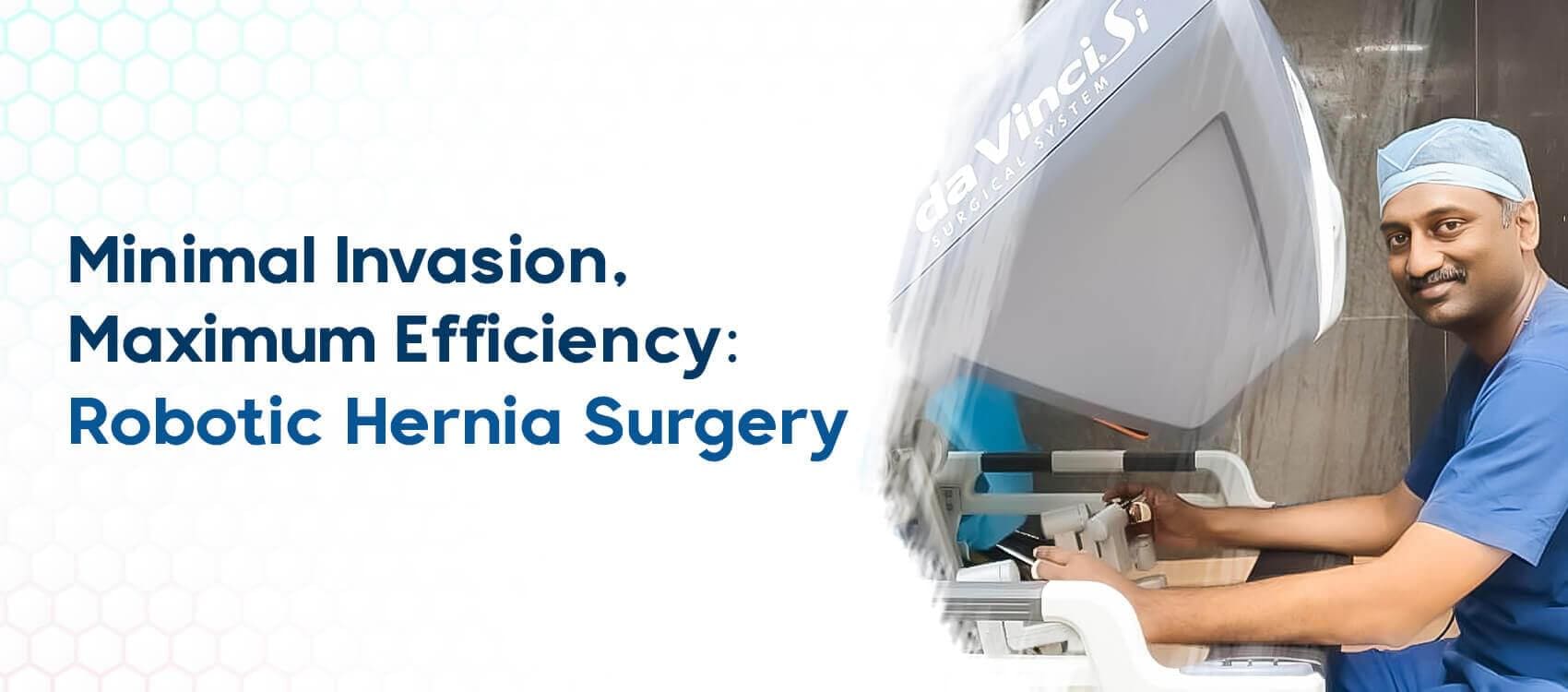
Both open and laparoscopic repair can be effective. Laparoscopic or other minimally invasive repair may be suitable for selected patients, while open repair may be preferable in other situations. The choice depends on the hernia type, size, location, previous operations, health and surgeon’s assessment. Dr. Parthasarathy’s profile specifically lists minimally invasive and laparoscopic hernia procedures.
Mesh is commonly used in many adult hernia repairs to reinforce the weakened area and reduce the chance of recurrence, but it is not appropriate or necessary in every situation. The decision depends on the type and size of the hernia, the repair technique and the patient’s circumstances.
Yes. Recurrence is possible even after a successful repair, although many repairs are durable. Factors can include the hernia type, tissue strength, surgical technique, wound problems, smoking, obesity, and returning to strenuous activity too early. Chronic pain can also occur in a small proportion of patients.
An anal fistula, or fistula-in-ano, is an abnormal tunnel between the anal canal and nearby skin, often developing after an anal abscess. Symptoms can include persistent or recurrent pain, swelling, pus or blood discharge, a small opening near the anus, and repeated abscesses.
Many fistula-in-ano cases need a procedure because the fistula tract can persist and may repeatedly cause infection. Some situations require different or staged treatment depending on the tract and sphincter involvement. A colorectal or surgical gastroenterology assessment is needed to choose the safest approach.
Treatment may include fistulotomy, seton placement, advancement or other sphincter-preserving procedures, and selected minimally invasive or laser techniques. The choice depends on the fistula’s anatomy, complexity, previous treatment and how much sphincter muscle is involved.
Laser treatment can be a minimally invasive option for selected fistula-in-ano patients, but it is not suitable for every fistula. Dr. G. Parthasarathy is listed by KIMS as having experience with fistula-in-ano and anorectal laser treatment; his profile also notes the use of LASERS for anorectal problems. Suitability should be confirmed after examination and assessment of the fistula tract.
Fever, severe or increasing pain with swelling, or a new painful lump can indicate an abscess or worsening infection and needs prompt medical assessment. Do not try to squeeze or drain it yourself.
Recovery depends on the procedure and complexity of the fistula. A general recovery range is often around 2–6 weeks for wound healing and return to normal activities, but some complex procedures take longer. Your surgeon should confirm the expected timeframe, including when you can return to work, exercise and normal diet.
Yes. Recurrence can occur, especially with complex or branching fistulas, persistent infection, or if the internal opening is difficult to treat. Follow-up helps detect recurrent drainage, pain or swelling early.
An anal fissure is a tear in the lining of the anus and commonly causes sharp pain during or after passing stool. An abscess is a collection of infection and pus that can cause severe pain, swelling and fever. A fistula-in-ano is a persistent abnormal tunnel, often left after an abscess. The treatments are different, so diagnosis matters.
A pilonidal sinus is a tract or opening usually found in the cleft near the tailbone. It may cause recurrent swelling, pain, pus or drainage. Repeated infection or persistent symptoms may require a procedure. Dr. Parthasarathy’s official site lists laser treatment for pilonidal sinus among its services.
A surgical gastroenterologist is a surgeon who specialises in digestive-system conditions that may need an operation or minimally invasive/keyhole surgery, including problems of the oesophagus, stomach, intestines, liver, gallbladder, pancreas and colorectal region. Unlike a medical gastroenterologist, who primarily manages digestive disease without surgery, a surgical gastroenterologist can evaluate and perform surgical treatment; they also differ from a general surgeon by having focused specialist training in gastrointestinal surgery. Dr. G. Parthasarathy, MBBS, MS, MCh, is a Senior Consultant in Surgical Gastroenterology and Laparoscopic/HPB Surgery at KIMS Hospitals, Secunderabad, with about two decades of experience.
Consider specialist assessment for persistent or recurrent digestive symptoms, abnormal scans or endoscopy, gallstones requiring surgery, suspected appendicitis, hernia, bowel obstruction, gastrointestinal tumours, or reflux/GERD that may need surgery. A surgical gastroenterologist can advise whether an operation, minimally invasive/keyhole treatment, or non-surgical care is appropriate.
Severe or worsening abdominal pain, persistent vomiting, a rigid or very tender abdomen, vomiting blood, black or tarry stool, yellow skin or eyes, fainting, or signs of bowel obstruction need urgent medical assessment. These symptoms can occur with serious conditions such as obstruction, bleeding, perforation, severe infection or biliary disease.
Surgery is considered when a specific condition is unlikely to improve with appropriate non-surgical care, keeps recurring, causes obstruction, bleeding, infection or other complications, or has a structural problem that needs correction. Examples include complicated gallstones, appendicitis, certain hernias, bowel obstruction, some gastrointestinal tumours, and selected GERD cases. The diagnosis and severity determine the treatment.
Minimally invasive, often called keyhole, surgery uses small incisions and specialised instruments rather than one larger open incision. In suitable patients it may reduce wound-related problems, postoperative discomfort and recovery time, although the benefits and risks depend on the operation and individual case.
Assessment may include medical history, physical examination, blood tests, ultrasound, CT or MRI, endoscopy, colonoscopy and other investigations when appropriate. The specialist combines the findings with the symptoms to identify the condition and decide whether surgery is needed.
Common surgical conditions include gallstones and gallbladder inflammation, for which laparoscopic gallbladder removal may be recommended in appropriate cases, and appendicitis, which may be treated with laparoscopic appendectomy. Dr. Parthasarathy’s listed surgical services include laparoscopic cholecystectomy and laparoscopic appendectomy.
Most GERD is managed without surgery. Surgery may be considered for selected patients with persistent symptoms despite appropriate treatment, complications, or a suitable anatomical problem such as a hiatal hernia. Procedures can include laparoscopic fundoplication in appropriate cases; Dr. Parthasarathy’s listed services include laparoscopic fundoplication.
Before surgery, the team usually reviews your diagnosis, medications, investigations, anaesthesia plan and expected recovery. Hospital stay varies by procedure, from same-day or short-stay treatment to several days for major surgery. Afterward, diet is usually advanced gradually as advised, and activity and return-to-work timing depend on the operation. Your surgeon will provide individual instructions for wound care, medicines and follow-up.
Piles, also called haemorrhoids, are swollen blood vessels and supporting tissues in and around the anus. Constipation, straining, prolonged toilet sitting, pregnancy and other factors can contribute. Symptoms may include bleeding, itching, discomfort, swelling or tissue protruding from the anus.
Treatment depends on the grade and symptoms. Options can include fibre and fluid intake, bowel-habit changes, medicines for symptom relief, rubber band ligation, sclerotherapy, and surgical or minimally invasive procedures for selected patients. Treatment should be based on an examination rather than symptoms alone.
Not everyone with piles needs surgery. Procedures or surgery may be considered when haemorrhoids are advanced, repeatedly prolapse, cause significant or persistent symptoms, or do not respond adequately to conservative or office-based treatment.
More advanced haemorrhoids may cause repeated bleeding, significant discomfort, swelling, thrombosis, or tissue that protrudes from the anus and may need manual or medical reduction. Examination is important because rectal bleeding can have causes other than haemorrhoids.
Heavy or ongoing bleeding, black or tarry stool, dizziness or fainting, weakness, or rectal bleeding accompanied by a change in bowel habits needs prompt medical evaluation. Bleeding should not automatically be attributed to piles, particularly when the pattern is new or changing.
Depending on the grade and symptoms, procedures may include rubber band ligation, sclerotherapy, and selected minimally invasive or surgical treatments. KIMS lists Dr. G. Parthasarathy as a Senior Consultant in Surgical Gastroenterology, Laparoscopic and HPB Surgery; his profile also notes experience with haemorrhoids and laser treatment for anorectal problems.
Mild haemorrhoid symptoms may settle with softer stools, adequate fibre and fluids, avoiding straining, and healthy toilet habits. If symptoms persist, recur frequently, or include bleeding, a clinician should assess the cause.
Prevent constipation, eat enough fibre, drink adequate fluids, avoid prolonged straining or sitting on the toilet, stay physically active, and follow any post-treatment instructions. Persistent or recurrent bleeding should be assessed rather than repeatedly self-treating.
The doctor may ask about bleeding, pain, bowel habits, constipation, prolapse and previous treatment, followed by an appropriate examination. Depending on the symptoms, further tests may be recommended to rule out other causes. You can also ask about treatment choices, expected recovery, recurrence risk and when to return to normal activities.

Your health deserves the best. Choose Dr Parthasarathy for the best GI care.


